

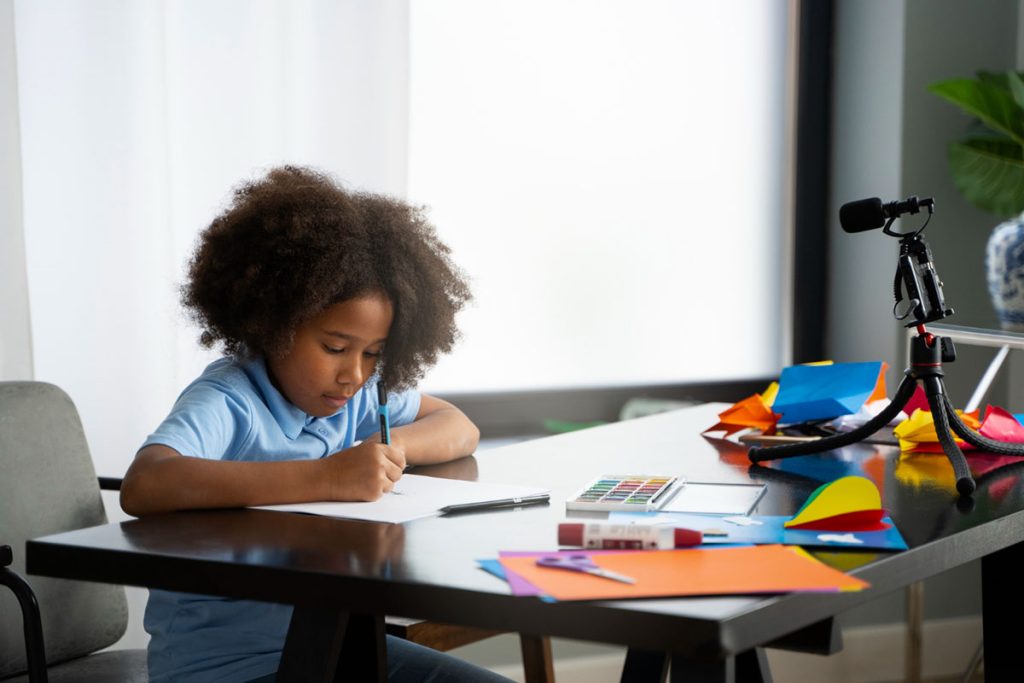
Creative writing is often the most dreaded part of the 11 plus exam UK process. For subjects like maths or verbal reasoning, there is always a clear right or wrong answer. Writing, however, feels entirely subjective. When faced with a blank piece of paper and a ticking clock, many ten year olds simply freeze. They either write a single panicked paragraph or a rambling story that completely loses its plot.
If your target school includes a written paper, you must include specific writing tasks in your 11+ exam preparation. Examiners read hundreds of stories on test day. To achieve a high mark, your child needs to know exactly how to make their piece stand out from the crowd. Here are the most effective strategies to transform their writing from basic to brilliant.
The biggest mistake children make in 11+ creative writing is focusing entirely on action. They want to write a thrilling blockbuster movie. A typical story will read like a list of events: the boy woke up, he found a monster, he fought the monster, and then he went home.
Examiners are not looking for a complex, busy plot. They do not care about explosions or alien invasions. They are looking for the ability to write beautifully. They want to see a rich vocabulary, correct punctuation, and a clear atmosphere. Teach your child to slow down. Writing an incredibly detailed description of a single spooky room will score much higher than a rushed story about a global war.
When the examiner says the exam has started, the immediate temptation is to pick up the pen and write as fast as possible. This is a massive mistake. A good story requires a roadmap.
Teach your child to spend the first five minutes simply planning. They should draw a quick mind map or a bulleted list on their rough paper. A perfect structure involves a clear beginning, a detailed middle, and a satisfying end. They need to know exactly how their story finishes before they write the very first sentence. This stops them from rambling and ensures their narrative actually makes sense.
This is perhaps the most important skill in creative writing. Most children write sentences that simply state a fact. For example, they might write that the girl was scared. This is telling.
Showing requires the writer to describe the physical reactions and the environment, allowing the reader to guess the emotion. Instead of saying the girl was scared, your child could write that the girl’s hands trembled as she backed away into the dark corner, her heart hammering against her ribs. This technique instantly upgrades the quality of their work and proves they have an advanced vocabulary.
When children describe a setting, they usually only describe what they can see. A truly immersive story uses all five senses.
During your home practice sessions, ask your child to close their eyes and imagine a specific location. It might be a deserted beach or a busy train station. Ask them what they can hear in the distance. What does the air smell like? What can they feel under their shoes? When they include the smell of salty air or the crunch of gravel underfoot, the examiner immediately feels transported into the story.
A page full of long, complicated sentences can actually be quite exhausting to read. The best writers know how to use sentence length to control the pace of the story.
Teach your child to use long, flowing sentences when they are describing a calm setting. When the story reaches an exciting or frightening moment, they should suddenly switch to short, sharp sentences. This builds tension. A paragraph ending with three short words creates a massive impact on the reader. It shows the examiner that your child is completely in control of their punctuation and pacing.
You cannot expect a child to write well if they do not read widely. Reading is the absolute fuel for writing. The best 11+ exam preparation involves reading classic books, poetry, and high quality fiction every single week.
When you read together, point out excellent descriptive paragraphs. Ask your child why they think the author chose a specific adjective. Encourage them to borrow great phrases and keep them in a dedicated notebook. When they see how professional authors construct their stories, they will naturally start to mimic those techniques in their own exam papers.
With regular practice and a focus on detail rather than action, your child will learn to enjoy the creative process. They will walk into the exam hall ready to impress the examiners with their unique, descriptive voice.
